Breakthrough manufacturing automation paves the way for treatment of debilitating illness.
One of our clients worked on the development of an allogeneic cell therapy to treat a disease that is increasing in prevalence in both emerging and mature economies alike. The therapy is derived from human umbilical tissue-derived cells (hUTCs) which are harvested then expanded to form a Master Cell Bank of cells. It is these cells that are processed to form the final drug product.
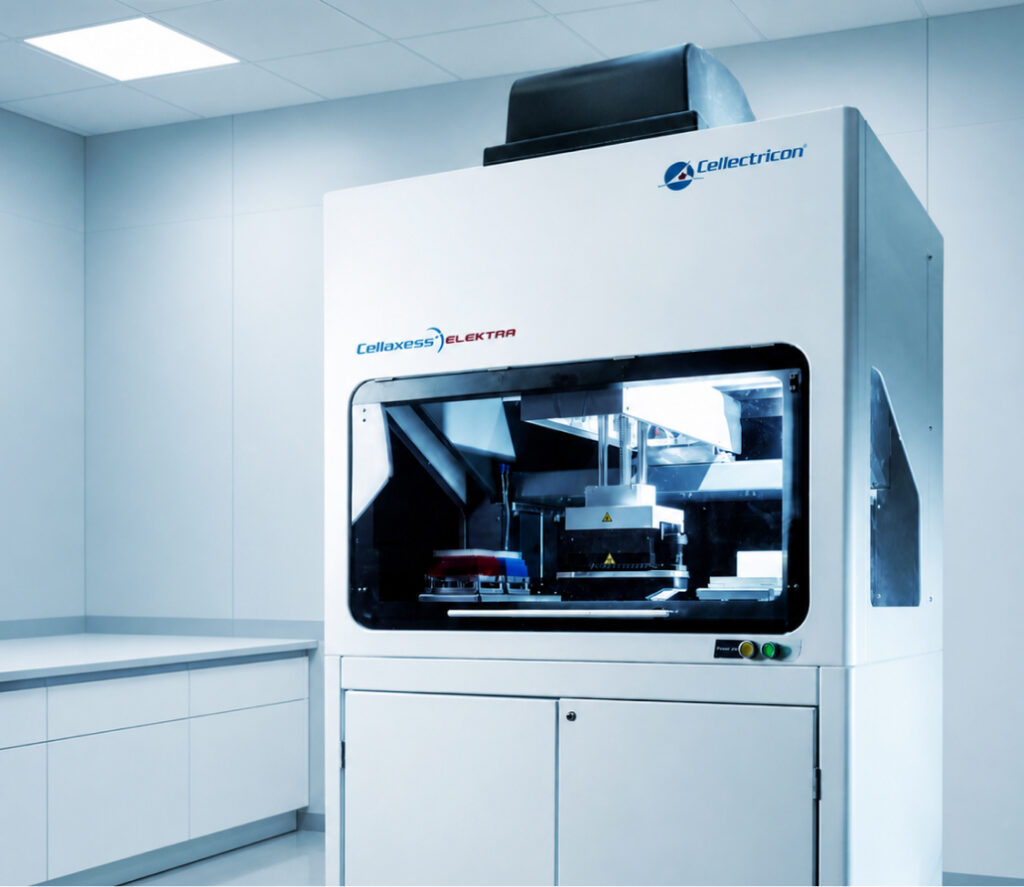
Our role in this ground-breaking development has been to design and supply the automation equipment that produces the cellular drug product for the Phase II and Phase IIb trials.
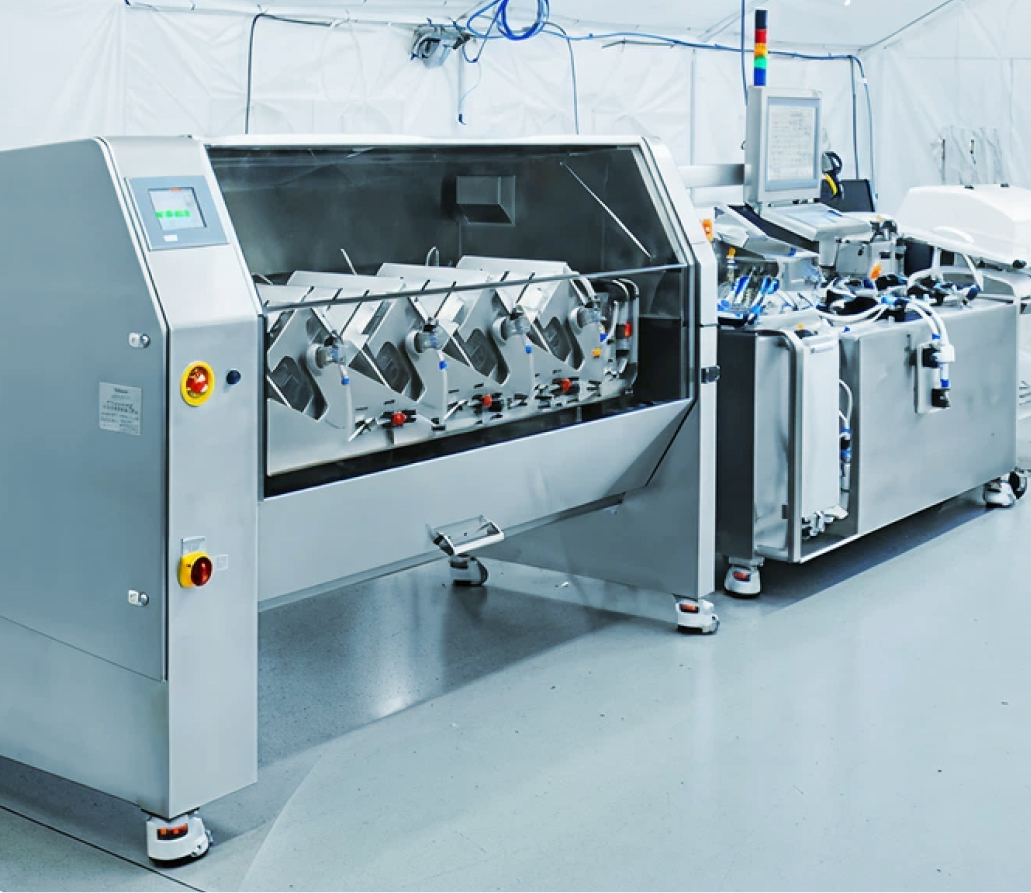
Three equipment platforms have been developed for our client to enable ongoing development for Phase III trials, and ultimately cGMP manufacture commercial product.
System components included:
- A cell expansion platform for handling expansion containers and medium fluidics
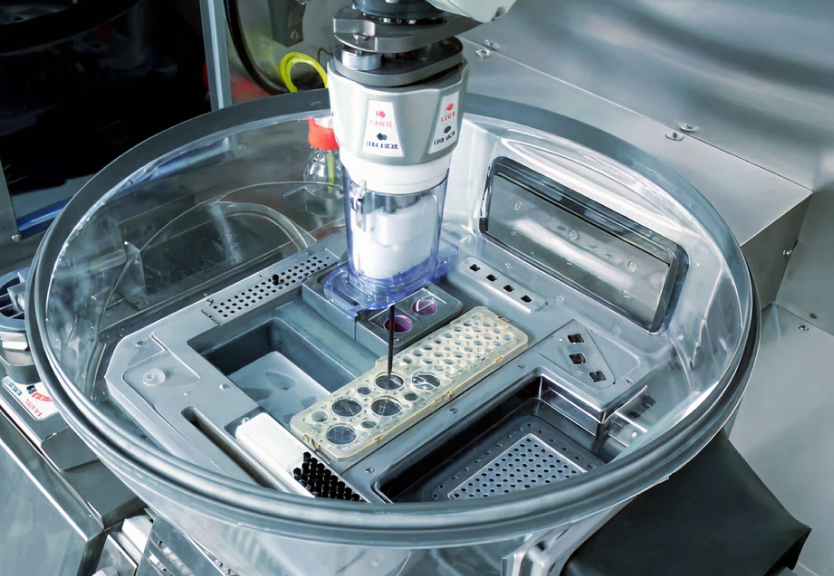
- A formulation platform for automated, closed, accurate and rapid formulation of concentrated cell suspension with cryo-preservative
- A working cell bank dispensing platform, enabling automated, closed, cryo-bag filling for up to 100 bags
Expanding adherent cells.
One of the key production challenges was to develop a solution to manage large populations of adherent cells in multiple parallel containers as a single batch. The consequences of a batch loss due to contamination or operator error is significant.
Loss of a final product batch can amount to several thousand doses, while loss of a working cell bank batch could ultimately amount to the loss of several hundred thousand doses and of course the associated significant delays to therapy.
Ensuring batch integrity.
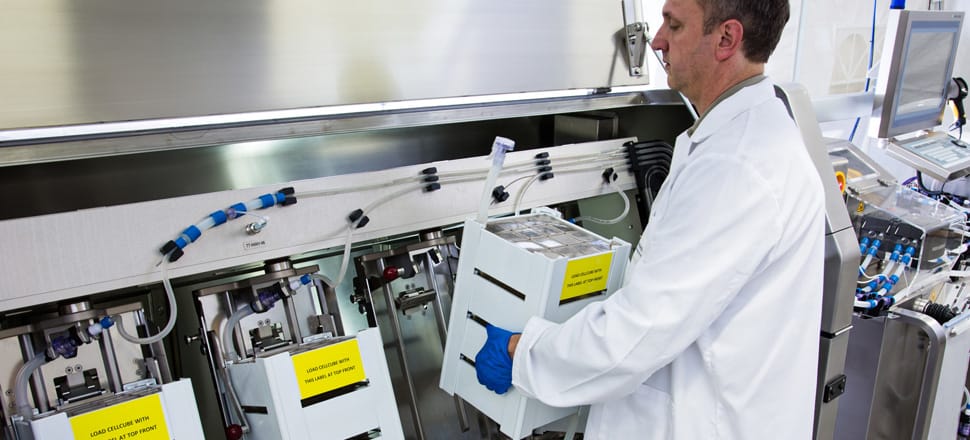
The first step in automating the process was to envision how it could be transformed from an open process performed in a Class A environment to a closed process. The cell culture containers used in this application are too heavy to be handled by a person when filled, and concurrent cube orientation and fluid transfer during seeding and harvest would be impossible without automation.
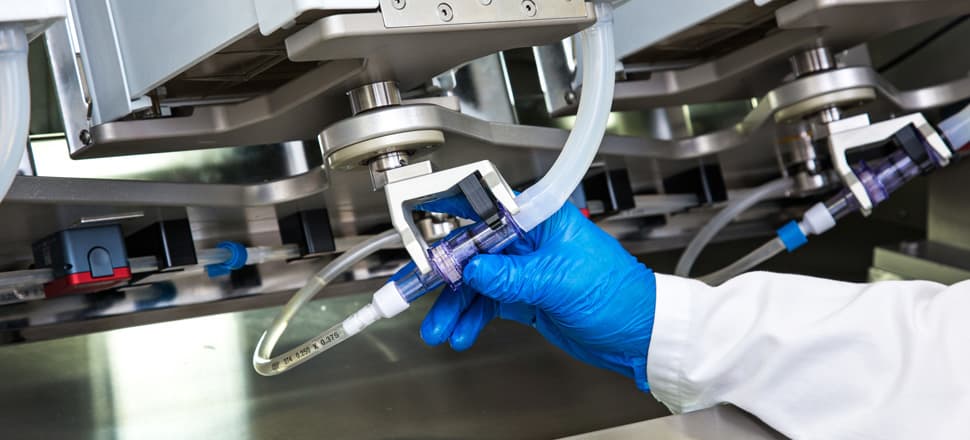
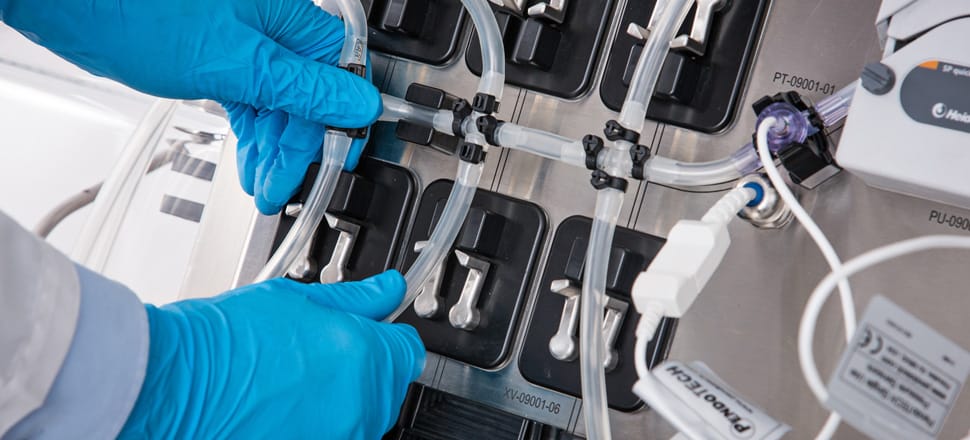
The solution involved a combination of automated physical manipulation of the cell culture containers together with automated fluidics and medium conditioning. This enabled four, 100-layer cell culture containers to be handled concurrently with associated process monitoring to ensure consistent conditions and maintain single batch integrity.
Applying automation to reduce operator error and associated compliance risk.
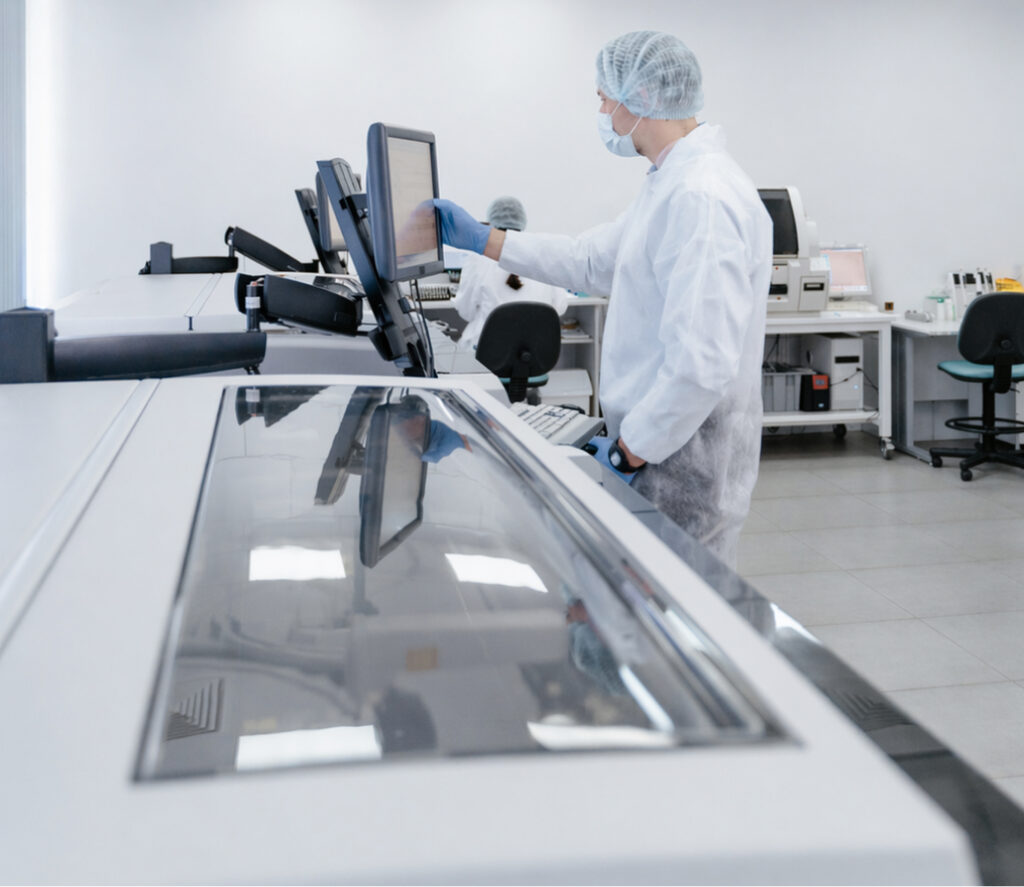
Our automated manufacturing approach enabled the recruitment of employees with skills and aptitude suited to consistency while achieving complex, concurrent, rapid actions in a highly repeatable manner. At the operator interface level, the automation guides the operator through the SOP and creates the batch record at the same time.
At the equipment control level, it enables multiple, complex actions to occur in precise timing that would be unrealistic for operators to perform reliably in a manual setting.